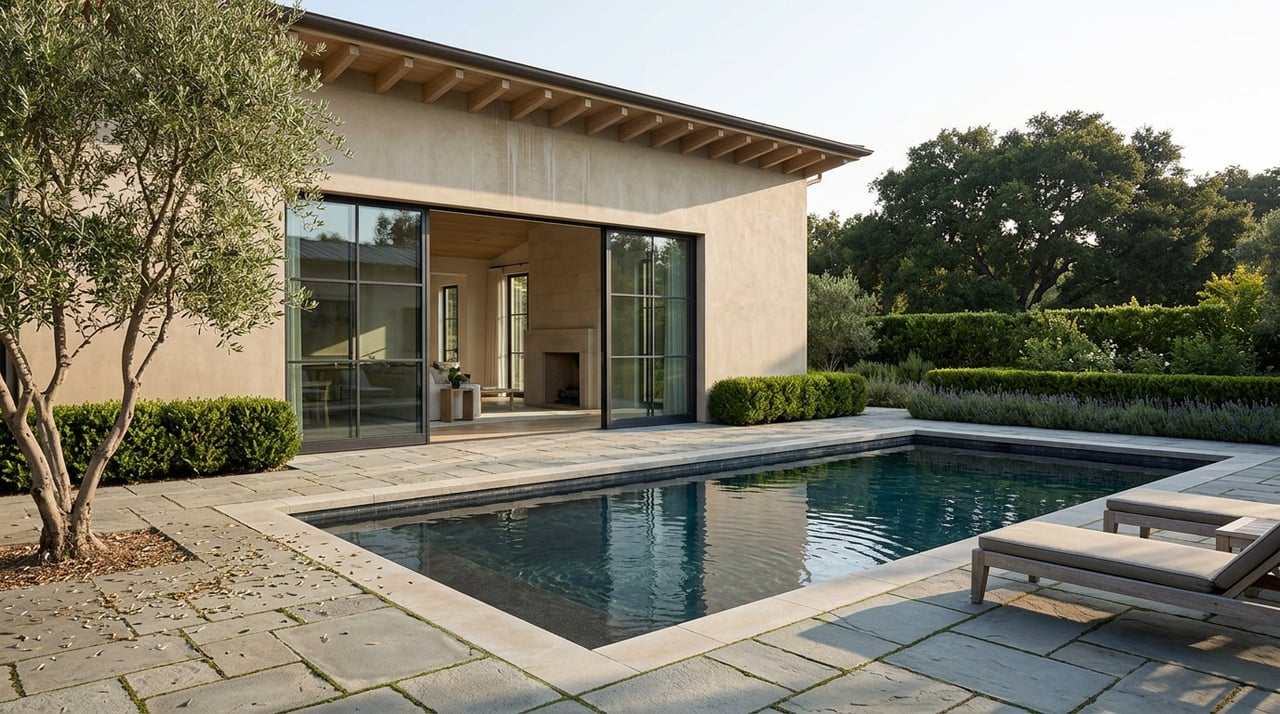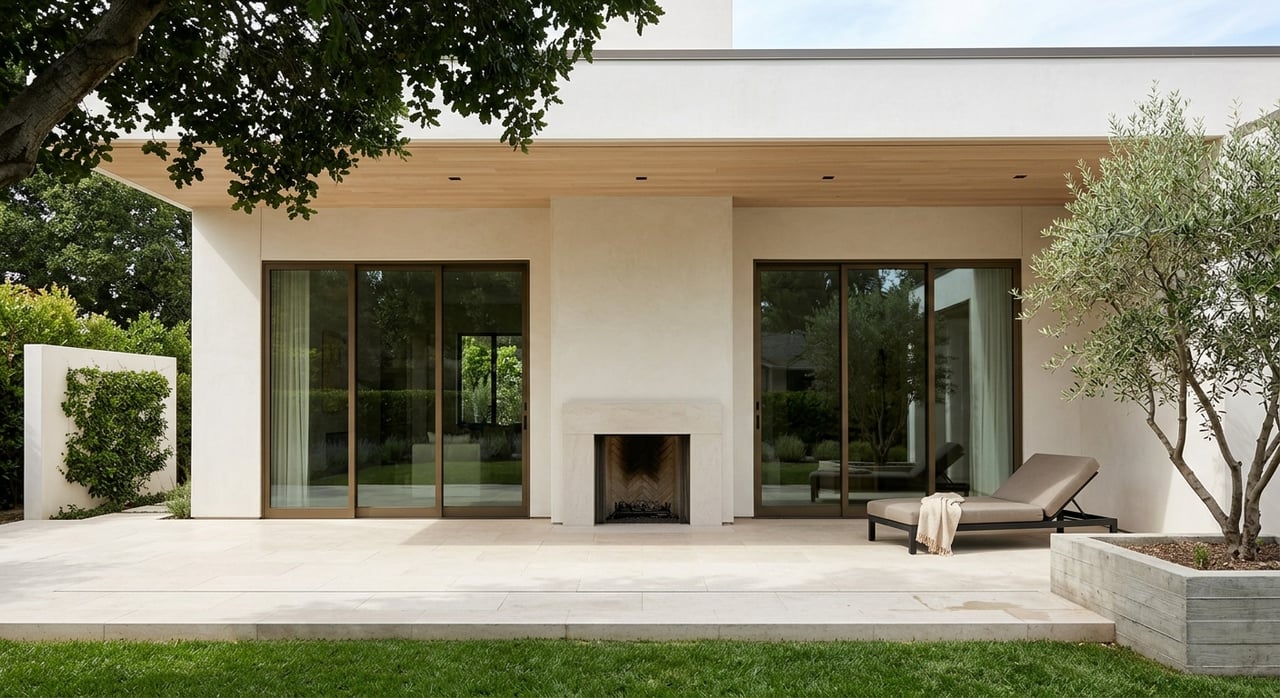
Thinking about building a custom home in Los Altos Hills? It can be an exciting path, but it is rarely simple. Between hillside constraints, wildfire planning, protected trees, and a multi-step review process, the earliest decisions often shape everything that follows. If you understand the local rules and design expectations from the start, you can plan more confidently and avoid costly surprises. Let’s dive in.
Why Los Altos Hills Planning Is Different
Los Altos Hills is intentionally low-density and semi-rural, and that character influences how custom homes are planned. Town standards aim to preserve open land, protect natural features, and support a residential-agricultural setting with an extensive internal pathway system.
That means your lot is not just a blank canvas. In the R-A district, the general minimum parcel size is 43,560 square feet, and each lot must include a 160-foot diameter building circle. Each lot must also contain at least one net acre within a 350-foot diameter circle.
Start With the Land
In Los Altos Hills, the site often drives the house more than the other way around. Slope, access, trees, and creek conditions can all affect where you build, how large the home can be, and how the Town evaluates the proposal.
Maximum development area and maximum floor area are tied to lot slope and lot unit factor. The Town can also apply stricter standards when site-specific conditions warrant it. On parcels with significant areas over 30% slope, calculations may be based on the flatter portion of the lot if the steeper areas are protected by a perpetual conservation easement and driveway access stays outside that easement.
Slope Matters Early
If you are evaluating land or early design concepts, slope should be one of the first items you review. A dramatic site may offer beautiful views, but it can also reduce usable building area and increase engineering complexity.
The Town’s guidance favors homes that follow the land rather than overpower it. On sloped sites, stepped or cut foundations are generally preferred over creating one large flat pad. Roads and driveways should also align with existing contours where possible.
Trees, Creeks, and Natural Features
Natural features are a major part of the planning process in Los Altos Hills. Heritage oaks are protected, and removing one requires a permit.
Creeks can affect buildable area too. Structures must be set back at least 25 feet from creek banks. In practice, mature trees, creek corridors, and steep slopes often shape both the footprint and the approval strategy for a custom home.
Design Choices That Usually Work Best
The homes that tend to move more smoothly through review are the ones that respond to the site and fit the Town’s design direction. In Los Altos Hills, that usually means a home that feels grounded, scaled to the land, and visually restrained from the street and neighboring properties.
The Town discourages highly visible three-story facades. Two-story homes may not be permitted on hilltops and ridges, which is important if you are hoping to maximize height on a prominent site.
Height and Massing Basics
The zoning code generally caps structure height at 27 feet. Primary dwellings can reach 32 feet only if setbacks are increased, and overall building height is capped at 35 feet.
These numbers matter, but so does how the home reads from outside. The Town encourages articulation in the building form, longer roof eaves, and designs that avoid the appearance of excessive bulk. Daylighted basements under two-story homes are discouraged when they create the look of a three-story facade.
Materials and Exterior Character
Los Altos Hills guidance generally favors natural or darker exterior colors. The goal is a home that blends with the setting rather than dominating it.
This is one reason design planning should happen alongside site analysis. Material choices, rooflines, and façade articulation are not just aesthetic decisions here. They can influence visibility, neighborhood response, and the review process itself.
Lighting, Fencing, and Edges
Seemingly smaller details can have real approval impact. The Town favors shielded, low-glare outdoor lighting that does not spill onto neighboring properties.
Fence design also matters. Near roads, the code prefers open fencing in natural materials over visually solid edge treatments. Depending on the site, standard conditions may also include landscape screening requirements to soften views from nearby roads or neighboring lots.
Wildfire Planning Is Part of the Design Brief
In Los Altos Hills, wildfire readiness is not a final checklist item. It is part of the project from the beginning.
The Town and Santa Clara County Fire Department both treat wildfire preparedness as a significant local issue. CAL FIRE released updated Local Responsibility Area fire-hazard maps in 2025, and the Town notes that local amendments may place some properties in higher hazard zones based on site-specific factors like dead-end roads, limited egress, and proximity to high-hazard open space.
What Fire Review Can Affect
Fire coordination can influence site layout, landscaping, access, and construction details. The Fire Prevention Division of the Santa Clara County Fire Department reviews fire and life-safety plans for land development and new building construction.
Town conditions and local guidance emphasize defensible space, fire-resistant landscaping, access and turnaround for emergency vehicles, Class A roofs, and sprinkler systems. If your lot has constrained access or a more exposed setting, it is smart to account for these issues early.
Sustainability Rules to Know
New construction in Los Altos Hills now comes with clear energy requirements. The Town’s reach codes require all newly constructed buildings, newly constructed detached ADUs, and other newly constructed detached habitable structures to be all-electric.
For new one- and two-family homes, you must also provide one EV-ready parking space per dwelling unit. These standards should be part of your architectural and systems planning from day one, especially if you are comparing building concepts or construction budgets.
How the Permit Process Works
A custom home in Los Altos Hills typically requires both a site-development permit and a building permit. The process starts with an initial information meeting with a planner.
After that, you move to a pre-application meeting. This step uses your survey, site plan, floor plans, and building sections to identify required submittals and fees. Some projects also require a geotechnical report reviewed by the Town Geologist.
Expect Revision Cycles
Once you formally submit, staff reviews the application and issues comment letters. Many projects go through one or more rounds of revisions before the application is deemed complete.
This is one reason early preparation matters so much. Clear plans, coordinated consultants, and a realistic understanding of the site can save time later.
Some Projects Need Public Hearings
The review path depends on project complexity. Simpler projects may be handled at staff level, while more complex proposals can go to the Planning Director or Planning Commission.
Additional review may involve the Fire Department, Town Geologist, Santa Clara County Water District, Pathways Committee, Environmental Design and Protection Committee, Planning Department, and Engineering Department. The broader the site constraints, the more coordination is usually required.
Story Poles Can Be Required
For visible new construction and certain major additions, the Town can require story poles. These may apply to new buildings, major additions, ADUs tied to new residences, and other prominent site changes.
If required, story poles must be installed before public noticing and remain in place through the hearing and appeal period. The Town notes that hearing notices for story-pole projects are mailed after the poles are completed and inspected.
Timeline Expectations
Even by Peninsula standards, custom-home approvals in Los Altos Hills can take time. The Town states that the average time from site-development permit submittal to building-permit issuance is about 13 to 17 weeks.
That is an average, not a promise. The actual timeline can expand if your project requires multiple revisions, a hearing, outside agency review, or an appeal.
Fast Track Is Limited
Fast-track review is possible, but only in specific situations. The project must conform to Town standards, require no variance or conditional development permit, avoid substantive neighborhood opposition, and the applicant must accept all conditions in writing.
Estate homes of 10,000 square feet or more follow a separate approval path and are not eligible for fast-track review. If you are considering a larger residence, it is important to plan for that added layer from the outset.
Build the Right Team Early
A strong consultant team can make the process more predictable. For many Los Altos Hills custom-home projects, that means bringing in the right specialists before design is far along.
Depending on the site, your team may include:
- An architect with hillside siting experience
- A civil engineer
- A surveyor
- A geotechnical consultant when slope or geology is a factor
- An arborist when mature trees may be affected
- A landscape professional for screening, planting, and site integration
The Town’s own checklists call for items such as topographic surveys, building sections, drainage plans, erosion-control plans, and certification of height and location by a civil engineer or licensed land surveyor before final inspection.
Other Due-Diligence Items to Check
A beautiful parcel can still come with practical constraints that affect cost and feasibility. Utility and access issues are especially important to verify early.
The Town may require sewer connection if a property is within 200 feet of a sewer line. Utilities may need to be undergrounded. A pathway fee, pathway easement, or pathway construction can also be triggered if a new home or major addition is built on a lot that does not already have a required path.
Why Early Real Estate Guidance Helps
If you are buying land, evaluating an older property for a rebuild, or deciding whether to sell before taking on a major project, local real estate guidance can be just as valuable as design input. In a market like Los Altos Hills, lot characteristics, entitlement complexity, and site constraints can all affect value.
That is where experienced, detail-oriented guidance matters. A careful review of access, slope, review risk, and design fit can help you make more informed decisions before you commit significant time and money.
Whether you are planning a future custom home or weighing the market value of a site with development potential, working with an advisor who understands Peninsula properties, design considerations, and transaction risk can help you move with more confidence.
If you are considering a purchase, sale, or rebuild opportunity in Los Altos Hills, Dana Rae Stone offers thoughtful, high-touch guidance shaped by deep Peninsula knowledge, design fluency, and a careful approach to complex residential decisions.
FAQs
What lot rules apply to custom homes in Los Altos Hills?
- In the R-A district, the general minimum parcel size is 43,560 square feet, and each lot must include a 160-foot diameter building circle plus at least one net acre within a 350-foot diameter circle.
How is house size determined for a Los Altos Hills custom home?
- Maximum development area and maximum floor area depend on the lot’s slope and lot unit factor, and the Town may apply stricter limits based on site-specific constraints.
Do custom homes in Los Altos Hills need wildfire review?
- Yes. Wildfire planning is an active part of local review, and site conditions such as access, egress, and proximity to open space can affect fire-related requirements.
Are heritage oaks protected in Los Altos Hills?
- Yes. Heritage oaks are protected, and removal requires a Town permit.
How long does custom-home permitting take in Los Altos Hills?
- The Town says the average time from site-development permit submittal to building-permit issuance is about 13 to 17 weeks, although more complex projects can take longer.
Can a Los Altos Hills custom-home project qualify for fast-track review?
- Possibly, but only if the project meets Town standards, needs no variance or conditional development permit, avoids substantive neighborhood opposition, and the applicant accepts all conditions in writing.